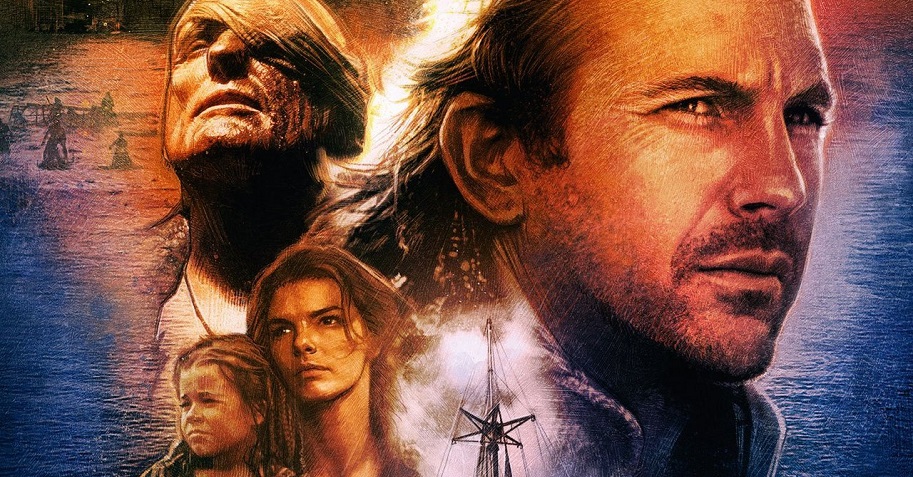
Somewhere in 1996, a young boy and possibly his cohorts are sitting on a dirty couch or splayed across a carpeted den floor ridden with crumbs or something like it. In the VCR is a rented copy of an infamous film of one kind or another from the local discount video rental which ran a special every Thursday, 10 videos for 10 dollars. If a new film was considered especially bad, it skipped the “New Releases” and made its way right to the genre section. Children are especially gullible. Or inexperienced. Or stupid. But they do know a bargain and have more than enough time to waste. The stack probably consisted of a few new and repeat rentals: Thunder in Paradise, Surf Ninjas, Dragon: The Bruce Lee Story, Terminator 2: Judgment Day, Twelve Monkeys, Billy Madison, Clueless, Bad Boys. Basically, anything our parents wouldn’t want us to buy. (My parents notoriously lacked the ability to understand the ratings system of both film and later games.) And yet, there was one special gem that stands out as being universally un-cult, un-loved, and yet known round the globe: Waterworld. Fast-forward twenty-three years and those same ugly kids are sitting on nicer couches and carpetless floors about to make the same mistake all over again. A recently rebuilt, full length, uncut copy dubbed “Ulysses” was released. A 3-hour cut made up of unreleased material and television edit made for a surprisingly nostalgic afternoon. It was like wasting time as a kid all over again.

First, a couple of thoughts on the new version that was released to give you an idea of the overall changes.The “Ulysses” cut of Waterworld seems to be some kind of fan created cut, including all of the cut material from the theatrical version, some scenes from the television cut, and an altered color palette that made everything more crisp and bright. It differs largely from the VHS version I had seen as a kid, obviously sharper with high definition, but jarring in that it had more than the 3 colors associated with the end of the world. Strangely, the new scenes somehow didn’t seem out of place. It was longer, but I couldn’t tell where the old content ended and the new content began, though there are some scenes edited in that were clearly never finished. You can see an island in the background that shouldn’t be there and there are a couple layers of post-production missing. What I can say for certain is the brighter color palette was not the best decision. While it made the ocean look a deeper shade of blue, it felt less gloomy. This was supposed to be a dystopian world covered in both water and despair. This new cut made it feel a bit more like a children’s adventure film without the fun, wonder, or sense of adventure found in films like The Goonies or Pirates of the Caribbean. It was like slapping some color on Twelve Monkeys and busting it down to a PG-13 rating. Still, it’s the best the modern world has to offer.

The most memorable thing about this film for me has always been Kevin Costner and Dennis Hopper. If you can’t remember, the characters largely live by their titles and don’t have traditional names. Costner played the lead as “Mariner”, a mutated human with ability to breath underwater. The Mariner’s character arc is inadequate and unfulfilling. It confused me as much today as it did when I was a kid. Let’s take Terminator 2 as an example. Cyberdyne Model T101 (Arnold Schwarzenegger) has more character growth in both action and attitude than Costner’s drift wooden Mariner. They both have similar interactions with their allies, but the Terminator actually gets along with both kids and mothers, like Kix cereal. In the 80’s and 90’s this was a pretty common character dynamic, stoic-seeming adults learning from kids. You might think Waterworld is going to follow this dynamic, but instead its sets a course on an endless desert ocean, drained of character and depth, and opts instead to make our hero as bland as his surroundings. The Mariner isn’t without his good points though. He does sail spectacularly and has some fun tricks up his sleeve both on and off the boat. But Costner appears to have absolutely no feeling in every delivery. Even when he’s mad, it doesn’t feel right. I thought the extended edition would give me a deeper glimpse into his arc or growth, but it’s non-existent. Costner plays a truly mutated character.

Waterworld does have an ocean of visual treasures to offer, to borrow a washed out metaphor. The seafaring is entertaining and well shot. The props all have carved Styrofoam look that remind you of a swashbuckling children’s film, but oddly it doesn’t detract from the dystopian feel the production is meant to have. The floating sets really do feel like functioning habitats, but if you look to long, you get the feeling that the design department went a bit too far in trying to make the barges look like they were made from debris, to the point that it becomes a comical game of “I Spy”. This stage-like quality was especially present in the new “Ulysses” cut, which also has the added benefit of having the film upgraded to 4k (or visually adjacent) which gave definition where it was strategically vague in its initial release. The murky browns, greys, and blurred lines of the 90’s era VHS cinematic apocalypse have given way to the fine lines and details of technological advancement. Like human age, its both a service of time and largely for the better, but it has its downsides. Stunts that were hard to make out are crystal clear and even more impressive, although in its clarity, it looks like a professional stunt show from Disneyland or Universal Studios, which makes perfect sense. I think I read that Waterworld was one of the most popular attractions at Universal Studios despite the movie not being a hit.

Finally, the overall nature of the world our characters reside in is epic in physical size, the whole world (presumably) is covered by water, but quaint in execution. This level of focus becomes a strength. The actors get to take a stand in front of this expansive stage and put on their best pirate act. If you can imagine, spending lots of time on the water could be stressful, and you get the feeling that the actors felt taxed by working in this manner. There is an underlying tension to every scene, even the more lighthearted ones. The production was plagued with bad weather, lost time, rebuilds, and a lengthy edit that caused the director to quit. But from this hellscape, there is a salvageable adventure story that rides at the precipice of an ever crashing wave, teetering between campy fun and a bizarre wipe-out. There is even a faint religious reasoning to the actions taken by the villains that didn’t make much of the theatrical cut. The people of the barges breed a life for each one lost, but the raiders believe in a sort of manifest destiny, take everything they can see and living much more freely than their environment can withstand, evident by the large number of children living on their ship in terrible conditions. But even the films darkest moments play for bold laughs and bravado.

This was, in my mind, the story of a person, basically a god amongst the people of his world, who wanted nothing but to take. He could breathe underwater and dive so deep that he could get soil, the currency of the world on top of the water, pay for whatever he wanted, and leave them with nothing. Its true, he couldn’t help everyone, but he chose to help no one. Until of course he owed a debt. A debt he tries to renege on a few times throughout the film. There was something there to explore, but they only ever scratch the surface of the Mariner. Instead, we go a long way to see a man make a single grand gesture that absolves him of all of his sins. Ultimately, Waterworld is an excuse to make a sci-fi/fantasy action movie on the water, floating on an inflated ego and a bloated budget in the middle of a monsoon, and yet somehow, it stays afloat until the credits.
~* 6/10 *~
Leave a Reply