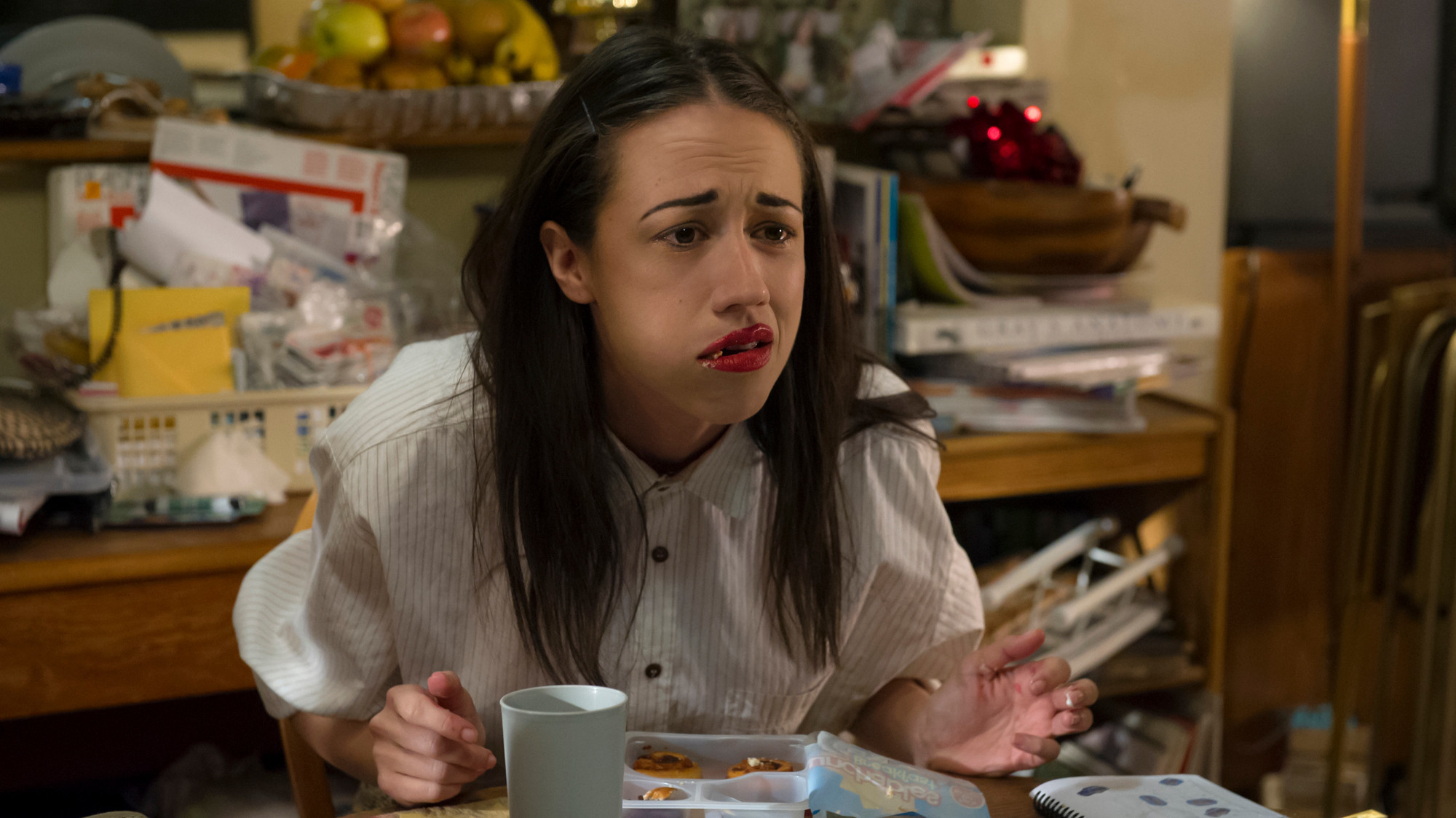
I enjoyed watching this show, and after finishing the season, I decided to do something I don’t normally do. I read the reviews on Netflix. You know the ones, hidden in the back of the show’s details. (Who wants to click 3 times to read reviews?) This is one of those shows that is clearly polarizing. So I was not surprised to find a 1-star-or-5-star split when reading through the reviews, with most people espousing that star Miranda Sings (played by Colleen Ballinger) was the problem. She came off as unrealistic, annoying, and incomprehensible. I am here to tell you, no character in this show is more real than Miranda Sings.
For a bit of my perspective, since the rise and fall of “Napoleon Dynamite”, awkward comedies have chipped a solid niche into the mainstream comedy landscape, and with it a kind of hindsight criticism of what is considered funny. Although universally praised by its target audience (and beyond), people have grown weary of Napoleon and copy-cat productions. It made a point of altering the perception of comedy. Like music, comedy is all about the rests between the notes, a series of timed silences. “Napoleon Dynamite” succeeded in making that silence as long as possible, using body language to keep the beat alive. With that, awkward comedy was given a pulse in the heartbeat of mainstream media. “Haters Back Off” finds itself somewhere between Napoleon, “The Office”, and off-beats like “Strangers with Candy”.

Miranda is at her core, selfish. So selfish, it infects her uncle and mother, both underachieving adults trying to make the most out of their lives vicariously through her. Miranda has all the exaggerated trappings of a home-schooled problem child that never aged beyond her tweens. She expects more for less. In the show, her age isn’t specified, but from context, I would guess she is in her Junior or Senior year of home school.
I am not only here to tell you the show is a good watch, well balanced, genuine, original in most regards, but also to defend Miranda’s authenticity. Around my Junior year in high school, I had a unique experience with people like Miranda. In an effort to reach out to my peers and overcome boundaries, I started a campaign to increase the membership of the Anime Club, of which I was president that year. It worked, but with unintended consequences. A large group Miranda’s had been unleashed upon the club. Specifically, the school administration decided that it would be a good idea if these kids joined a non-academic, leisure club and “suggested” they join. They made up a large minority, but by far the most memorable. They each demanded so much attention. The undermined every intention I had for the club. I wanted to have meaningful discourse about the shows we watched and to help educate about the medium, which they made a difficult task. In catering to them, I ended up losing some of the extended audience I wanted to bring in. High school is about “cool”, and these kids were anything but, in the traditional sense.

This taught me an important life lesson. I certainly wasn’t going to turn these kids away, but I wasn’t capable of truly channeling their energy either. My compromise was to abandon my intentions and meet their needs and the needs of the other members. I simply gave them a democratic choice as to what they wanted to watch, made a short presentation, and started the show. They were happy to be part of something, and I was happy to spread my hobby to anyone who was willing to sit in and watch.
Dealing with children with unique personality traits while you are also a child was a difficult task. I felt a real kinship with Miranda’s sister, Emily. She suffers through her sister’s constant abuse, knowing that Miranda isn’t completely aware of the way she acts. Emily portrays how I felt inside during my junior year. It was really uncomfortable to have any sort of confrontation with these kids. I didn’t want to hurt their feelings and felt somewhat responsible for their social well being during club hours. If Miranda and company make you feel uncomfortable, that is by design. It’s a natural response when confronted with people who twist social situations into contortions you can’t make heads or tails; an instant social labyrinth.
I challenge the viewer who feels uncomfortable to continue watching. It reminds me of the younger years of Michael from “The Office”, and I think it is crafted just as carefully. There is more to this show than just being awkward.
Leave a Reply