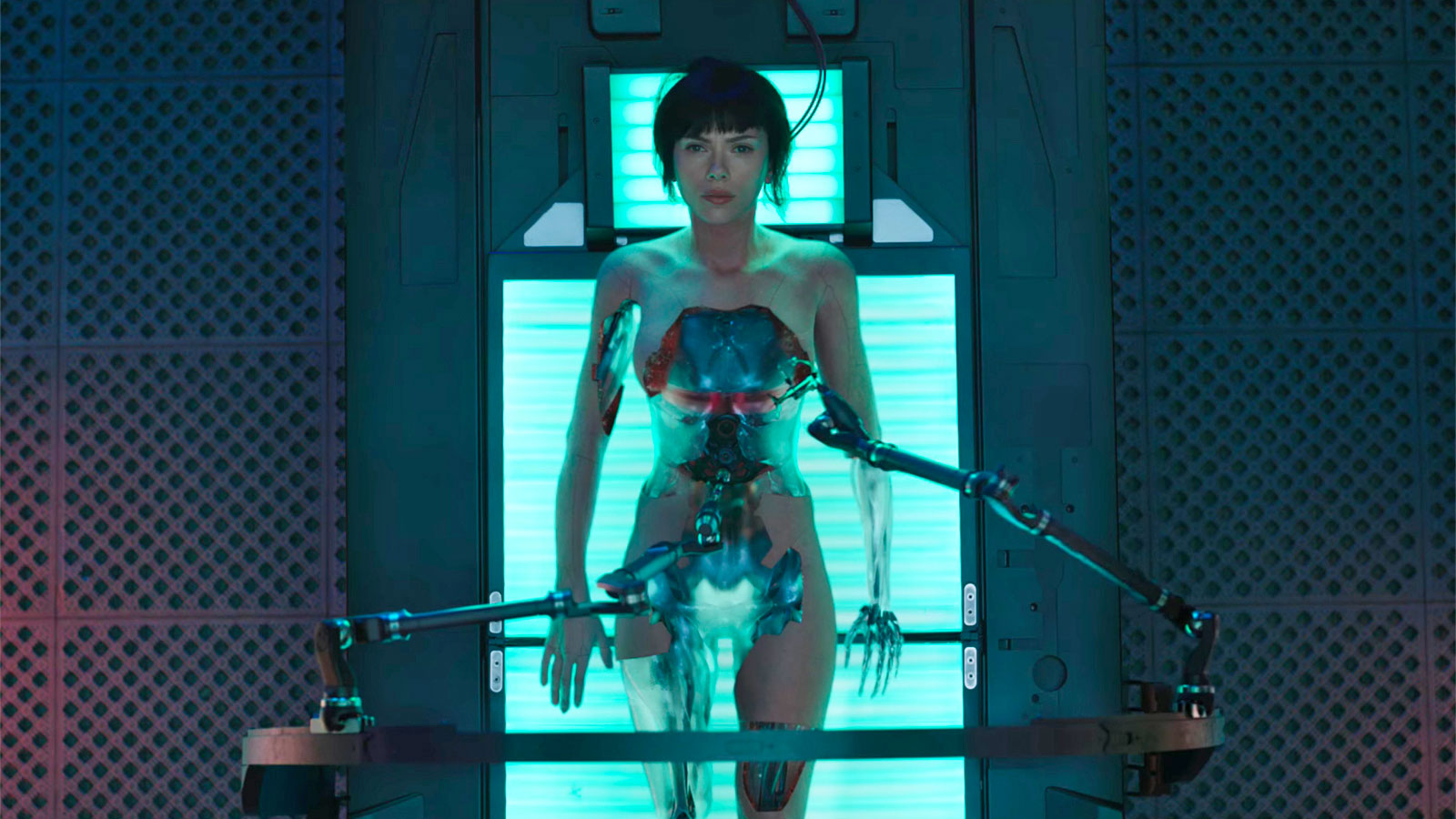
Pushing past all the controversy, I decided to head out to Ghost In The Shell. In case you are unaware, there was a series of complaints by fans of the original film and comic (produced in Japan by a Japanese author staring a Japanese female named Motoko Kusanagi) about the decision to have Scarlett Johannson, a white woman, play a Japanese character. The term whitewashing, a growing concern for Americans, was thrown around quickly, fairly, and earnestly. Amid the struggle, I found one superficial personal concern. Ghost In The Shell is largely unconcerned with ethnicity of any of its characters and is in a very real way more detached from Japanese popular culture than most anime produced. GiTS concerns were largely philosophical. However, realistically that’s not really the issue here in America. Lets get to the film overall first. […]

It was essentially empty. An extension of a shell, hulled of all of its resources. On the outside, its very pretty and enticing, combining several scenes from the different points of the entire GiTS cannon to create a safe space for fans. The backing and scene work is this films shining jewel. Basically, it’s like a visual overlay from some fancy 3D goggles that makes the bland, drab world a colorful wonderland.
Scarlett Johansson’s portrayal of the Major, renamed Mira Killian, was hollow and robotic, but not because she was a robot, mostly due to lack of direction. The plot is essentially that, in the future while immigrating to Japan, Mira Killian and her parent’s ship was sunk in the harbor, and she was the only survivor. Hanka, a cybernetics company, decided her body was too badly damaged to fix, so they took her brain and placed it into a prototype cybernetic body whose main purpose was in turn to enlist in Section 9, an anti-terrorism arm of the Japanese government. As you can see, there are a lot of jumps in logic here, and don’t worry, the film doesn’t explain any of it. I honestly think because the drive of the film was placed on asking, “Who was I? What is happening to me?” is a severe oversimplification of the existential and philosophical questions of the original. Major Motoko Kusanagi was more concerned with, “Who am I? What does it mean that I am not in a human body?”. The films main villain in the original was a network application that gained awareness and consciousness who used cyber terrorism to try and gain asylum and recognition of his liberties as a conscious being. The new villain is just angry that his project didn’t go as planned. Everyone else in the film performs quite well under the circumstances, even though most of the characters were sidelined outside Batou (Pilou Asbæk) and Aramaki (Takeshi Kitano).

Returning to the whitewashing debate, I felt that, without any doubt, she should have been a Japanese actress. Not because the original story (as her origins are somewhat debatable in terms of nationality), but because in America, there are under represented groups of ethnicity that could have very easily grabbed the spotlight here. Asian-American actresses are two fold a minority in ethnicity and gender. Without a better way to describe it, this was simply a bad call on the part of whoever was in charge. Americans crave proper representation beyond our stereotypes. White Americans are Americans first, hypen-Americans second (ie Scottish-American, Irish-American, British-American, Polish-American, ect.). Every other ethnicity is the opposite first (African-American, Asian-American, Mexican-American). As a who-knows-how-many-generations-removed black man born in America, I have always been an American first, born and raised with no other mother country or cultural influence. Without proper representation in our culture of all shades, hyphen or not, who are we?

Without giving anything away, ultimately, they answer to their casting decisions in the film. It will be no surprise to me if this film bombs spectacularly. I enjoyed getting a chance to see some of this come to life on film, it’s just too bad that it was dumbed down to make it a bit easier to swallow for a larger audience. Fan or not, it’s a good popcorn flick if you like special effects and design. Outside of that, you may want to wait for the VHS.
~* 7/10 *~
Leave a Reply