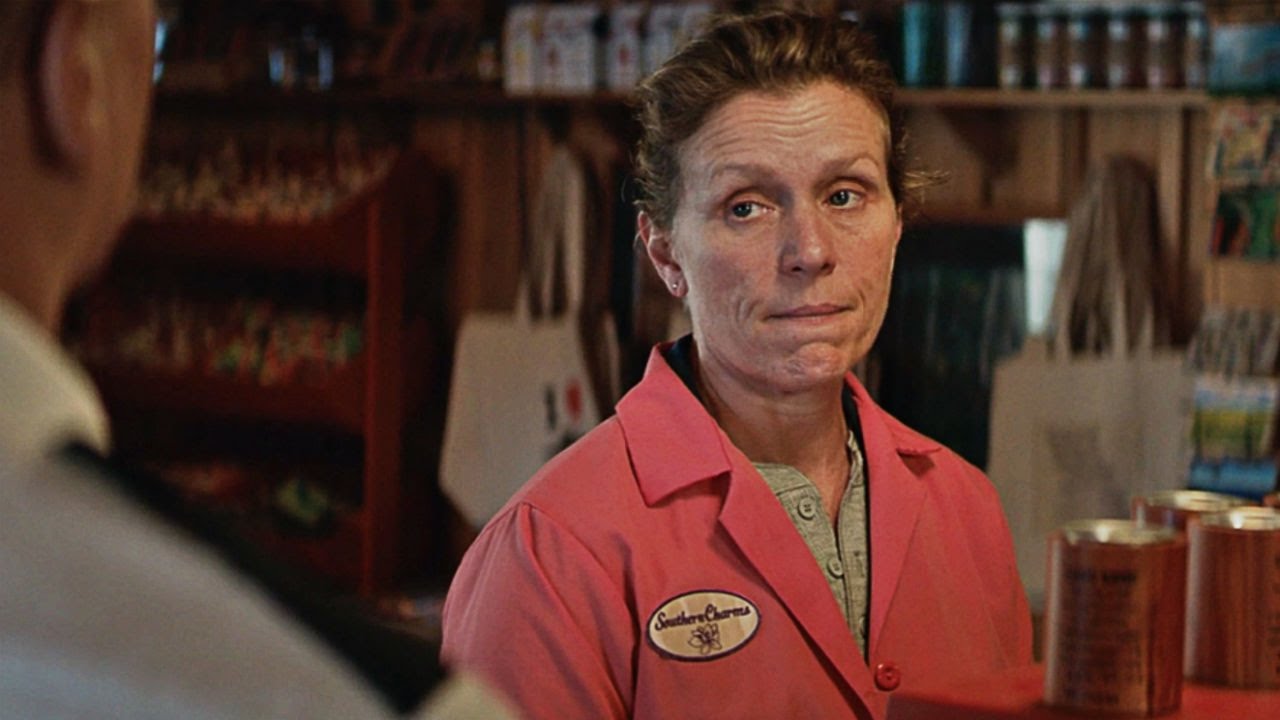
I can’t imagine how it feels to have your child brutally tortured and raped while dying. This is the premise of Three Billboards Outside Ebbing, Missouri, and the second most terrible part is realizing that we live in a world where not only is this is possible, but it might not even pass local news headlines. However, to be clear, this is NOT a true story. It is a dark-comedy that hoists a mirror in front of modern America, so desperate to be progressive and yet dying to stay the same. There are very few films where the line between justice and vengeance have ever been so blurred. Teetering on the edge is a woman pushed too far whose daughter’s case wasn’t pushed far enough. To this end, she pays to advertise her local police departments failure to catch her daughter’s killer(s) in the form of three billboards. But there is so much more to this film than what is outlined in the trailer or even in this introduction. You will leave this film asking yourself, at what point does fiction bare more fruit than fact?

At the heart of this film is the performance of Frances McDormand as Mildred, star of dark comedies and absurdities like Fargo and Burn After Reading. She has the ability to bring realistic characteristics to the unrealistic or otherwise grounded people. And what’s more, she can turn that on a dime. This film almost feels like it was written and produced around her and it’s all the better for it. In Mildred’s words she might call herself the only cunt with a built in spine. The subject matter that starts the film is dark, but the real catalyst is her insistence on justice. It almost leads you to believe that the insistence of justice is sinister. That pushing our society to be held accountable for the worst of us is tantamount to the true betterment of society. If you aren’t questioning whether or not Mildred is the villain of this film, than this film hasn’t pushed you far enough. Writer/Director Martin McDonagh poses the question, “When does your quest for justice outweigh justice itself?”

I think I have sufficiently enough described the dark part of the story, so how does the comedy stack up? Well, without it, this film wouldn’t really stand up. This film is largely structured around how bad our interaction could be if we, say, did and said whatever we wanted. This is specifically prevalent in the character Dixon (Sam Rockwell), an unbalanced moronic cop with an over inflated sense of confidence, mostly brought on by ignorance. Rockwell has an unending gift in playing the dimwit and it’s a pure pleasure to watch here. On the other side of the coin is his commanding officer and chief of the local police Willoughby (Woody Harrelson). Harelson continues in the line of his commanding roles, a presence he is clearly become a master at. He plays off of McDormand beautifully, both immovable objects set on a collision course designed to impede everyone in their town, including the people they love and admittedly some they don’t.

If I were to criticize anything, it would be that the series of events in this film are some of the most improbable, but it is precisely because of that balance that this feels like a film in which all the events embody the adage “Truth is stranger than fiction”. Three Billboards is one of those rare stories in the vein of Fargo where you will swear that everything you are seeing is true, but the difference here is that this time you wish it hadn’t been so true. In the current climate, this film hits too close to home, so if you are looking to really escape, this film isn’t it. It’s an honest reflection on who we have decided to be: selfish, unrelenting, and uncompromising.
~* 9/10 *~
Leave a Reply