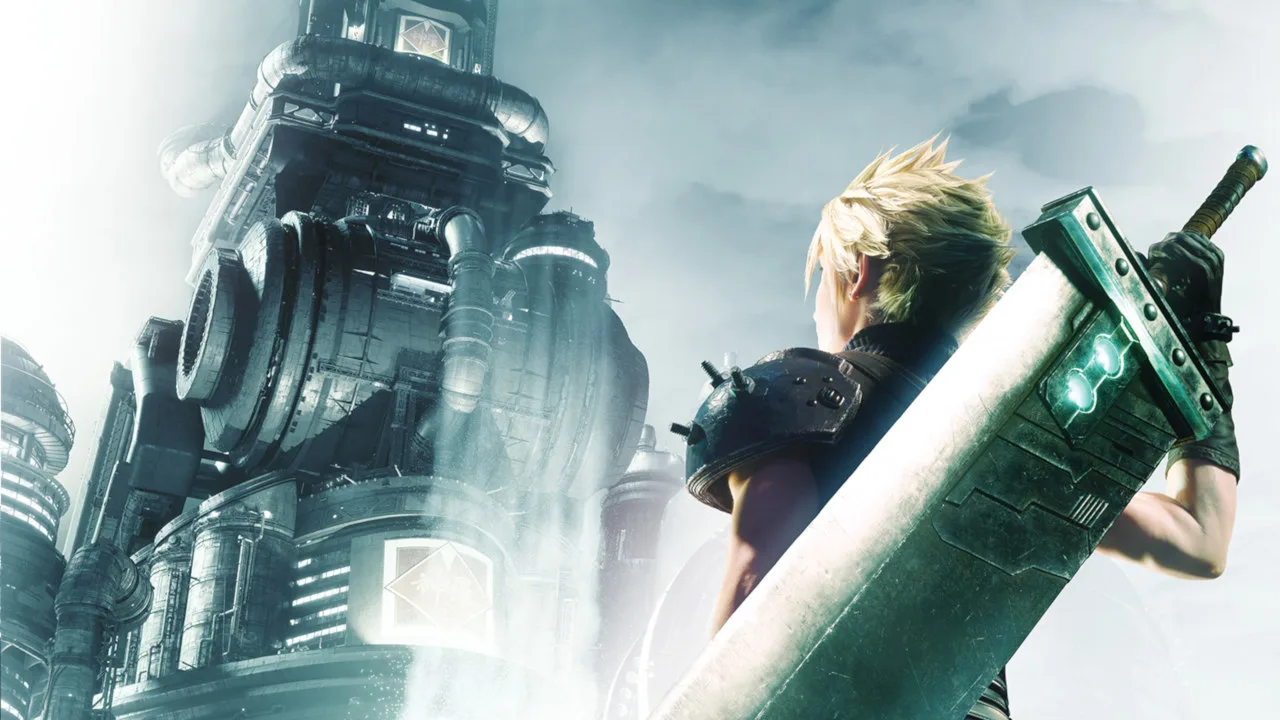
This is the 2nd out of 3 articles. Find the first here.
Enough with the flowery language. No more ancient memories of times passed. No more wasted passages on the origin of Final Fantasy VII. I am not some little kid sitting crossed-legged in front of a 13-inch tube TV, but a man sitting in a lightly used office chair he found by the apartment dumpster several years ago. I have grown. The gaming world has grown. And Final Fantasy has grown. But is it the kind of growth you imagined? Does this game shed the dead weight of its numbered younger siblings? Does it recreate an experience from your childhood? Is it an innovative gaming experience that redefines the RPG like its genesis? Is breathing life into one of the most provocative modern gaming death’s worth the exhumation? These are the questions swimming in my head while I waited for the release of Final Fantasy 7 Remake, a deeply marked touchstone in my life. And after having completed my run through the game, I had some thoughts I needed to organize and share. I need to decide: Is this a proper run, a proper update, a proper remake? Or is it just a repurposed chair found by the dumpster?
Let me clarify a few things. First, this is going to be a straight review of the game with little-to-no spoilers. Second, this is the 2nd in a series of 3 articles I decided to write, with the final article being a no-holds-barred, spoiler frenzy discussing the outcomes of this game and many other Final Fantasy’s. In this article, we are going to be looking at what the game did well, what it was mediocre at, and lastly, what was downright disappointing. Each section will bleed into each other a bit because the games components bleed into each other a bit, which feels a little odd for a JRPG, but this isn’t ye-old JRPG. Let’s get right to it.

RE-KWARK!-ABLE! I MEAN REMARKABLE.
Before we tear this game down, let’s spend some time building it up. The standout component of this game was very clearly the battle system. The transition is seamless and the frenzy begins almost immediately. What surprised me right off the bat is how easy it was to not only switch between characters, but how simply it was to tell them what to do. I thought slowing down the battle to issue commands was going to be a nuisance, but it really helped balance out the pace of the battle. You can assign 4 hotkeys that let you keep the battle going without slowing down to strike at an enemies weakness. I did find that it felt a little useless to assign anything other than your weapon skills, because spells take a little time to cast and most of the time you are going to want to pick a specific spell based on the enemies weakness, but that is totally up to your playstyle.
In the vein of the battle system, boss fights were engrossing and detailed. It felt like they spent a lot of time thinking about which moments in the Midgar timeline would make the best boss battles and how exactly they would design the bosses moveset and structure based not only on what the boss was, but where the boss was. In one chapter, you fight a boss that is nearby some train tracks. At a certain point in the battle, it will electrify the track, and if you are standing on it, you get major damage. Enemy types also had a pretty consistent set of weaknesses, so you didn’t have to go into the bestiary menu to determine what spell would most likely take it down. But on the other hand, the Assess ability is crucial in understanding some of the more minute methods to hitting the enemy weakness. It was actually a delight to try and fight both with and without it. Like everything else in the battle, the menu comes up with a single button press and no load time. It gives you time to read and strategize your attacks.

In some other reviews I had been reading, people had complained about a feature I loved. Using spells and abilities requires you to have your ATB gauge filled, which will fill with time, but fills much faster if you are attacking. The complaint was that the AI isn’t particularly good at attacking when you aren’t using them, and not only that, they don’t receive the ATB fill bonus from attacking, it simply takes them time. However, because transition between characters is instantaneous, I believe that the designers did this as an incentive to use each character as often as possible. This isn’t the only incentive for this either. Every weapon for each character has a single skill that can be learned from it. To learn it, you have to use a skill. Again, to use the skill the ATB gauge has to be filled. Most battles in the game go by quickly, especially once you know the enemies weakness, so you need to build ATB fast and activate the skill. Without telling you, the game basically created an environment where it’s not only necessary to switch between characters and learn their playstyles, but almost necessary. What’s more, every character is somewhat unique, especially Barret and Aerith, and certain types of enemies (flying or distance based, ect) are much easier to handle with the right character. All around, the battle system is an absolute standout and easily the best part of the game.

Without giving anything away, another strong part of the game is the scenario design. I was driven to hear more, see more, and do more in this game. The characters a crisp and vibrant, even when they lack depth. They are undeniably “cool” or “cute” or whatever their main adjective should be for the given scenario. The voice acting in both the Japanese and English versions are great, though the Japanese version from time to time has a different take on some of the characters than the English, it’s still a blast. Every moment that leads into a battle with a signature villain is thoroughly enjoyable. I don’t think you absolutely need to have played the original to enjoy these moments, but more on that later. What it really comes down to is this game has some pretty great pacing because even when it fumbles, it doesn’t stop you from wanting to play more. The battle system element just propels you forward and hearing what crazy thing is going to happen next is more than enough to make up for follies.

This is sad to say, but there really is only one more exceptional item to mention. The return of Nobuo Uematsu. The soundtrack of this game was already pretty well designed in the original. Coming back to it was more than just a nostalgic walk down memory lane. It was like coming home and realizing your parent’s upgraded your house to a mansion with room service, a full staff, and a kitchen that’s open 24 hours a day stocked with everything you desire. And it isn’t just that the music was remastered, it flows in and out of the game with masterful timing. Multiple versions of each song were recorded so that movements in the song crescendo at the exact moment your Cloud lands a hit or Reno and Rude jump from a helicopter. It made every moment of the game feel like so much more than just an average confrontation. There are a few moments that even made me laugh. There is a hip-hop inspired Chocobo theme that made me smile both for how odd it was and how awful it should have been received, but somehow it just slaps. If you pay attention you might notice some of the music is more
reminiscent of other entries in the series with two standouts in
particular, one sounding like Final Fantasy XII and another like Final
Fantasy XIII, two very different scores. But it felt right at home in
this modernized version of Final Fantasy VII. There is also a music collection sidequest that is mostly made up of jazzy remakes of classic Final Fantasy VII songs. These are less remarkable, but still good for the most part. Part of the issue with these songs is it is played through some kind of fuzzy record player speaker overlay, which I found annoying and distorting.

MISSED THE KWARK! I MEAN MARK.
I would say that almost everything else in this game missed the mark in some way or another. Some are just shy of a home run, others are baseline grounders, and some are just straight fouls. Either way, they could have used more attention or a different direction in my opinion. And I want to start with something I almost never complain about in video games: the graphics. Talking about graphics is usually pointless. People who are after ridiculous levels of fidelity always seem to believe this either makes or breaks the game. In Remake, that might actually be true for once. I am not a graphics designer, but one thing I noticed and couldn’t stop noticing is that there were so many different levels of graphical fidelity all smashed into one place. In some scenes, there were gorgeous details, like the entirety of Aerith’s house area, but then you get to the flowers, it’s like 1997 again. In other moments, like when looking down at the Midgar Slums from the upper plate, it is clearly a very flat and stretched image meant to look three-dimensional like the other things around you, but the image was just off. Doors on buildings would look like garbage compared to the floor or walls in the room. It was just very clear that a once over on all the different assets would have helped out quite a bit. The problem wasn’t that the graphics were good or bad, but that they were inconsistent. It was like looking at photo-realistic drawing with some Picasso in the middle. The character models were so well done, when the interacted with this space, it was just jarring. Again, not awful, just missed the mark.
With such a well maintained battle system, you would think the menu system would be equally flawless, but it wasn’t. The main UI where you would outfit your party was a bit of a mess. For one, there was no way to go from upgrading your weapon to equipping it or vice-versa. They had completely separate menus for both that didn’t lead to each other. Then there is the upgrade menu itself, wherein you select upgrades in a similar way to FFXIII crystal upgrade menu. When you choose the weapon, it takes you to a completely different screen and makes this loud noise and transition effect. It’s annoying to read and to navigate. You can bypass this by having the computer choose your upgrades for you, but that really felt like I was missing out. It would have been a huge improvement just to list the abilities and have me choose from the same menu I chose everything else. It was unnecessarily fancy and kind of an eyesore. Equipping materia got a small upgrade from the original game, wherein you can press a button to see and switch out materia with everyone, but this should have just been THE menu, not an extra button press. They also should have categorized the materia, letting you choose which type you wanted to look at instead of having to scroll through line after line. The menu also doesn’t give you simple information in places where you could use it, like what chapter you are in. To know, you have to go to the save menu. It could have simply been listed next to the playtime in the bottom corner.

There are even certain materia that are hard to understand, specifically the Enemy Skill materia. In the old game it would list which skills you had obtained. This one didn’t give you any idea what you had obtained and what exactly was obtainable. After a while I figured out that in the bestiary, although it would tell you which monster had a skill you could get, it wouldn’t exactly say if you had it. Turns out that if the skill was highlighted green on the enemy skills screen (another button press away), you didn’t have it, if it was blue, you did. Then, to see which skills you had in total, you had to go to the party screen and it would be listed under your abilities if they were wearing the materia. Not only that, the skill would have a different name than the skill the enemy used, the naming convention wasn’t 1-to-1. Add to this, materia sometimes have very obscure instructions or descriptions. The battles can go by so fast, it’s hard to even notice the effect of them if something isn’t exploding or outwardly obvious. In fact, many of the instructions are weird in the game. If you die in a series of fights where they are linked, it will ask if you want to go back to the first fight or the last fight. Choosing the first actually sends you back to before you started the series and you can adjust your equipment, which is fine, but in a normal fight, if you die, you can only go back to the fight and it doesn’t let you modify your equipment. It’s a simple inconsistency but the text and cursor placement also make it hard to understand exactly what is going to happen.

Finally, all the smaller issues. There are too many places where the game has you “walk” for no particular reason. You just slow down. I thought it might be due to loading, but it happens in places where no story or anything appears to be happening next. Summon materia is already maxed and it doesn’t feel like it helps all that much, even when the enemy is weak to them. The game design is set up so that whichever character you are currently playing as the only thing enemies are interested in attacking, especially if someone isn’t using provoke. So, your summon simply attacks, and to do it’s better attacks, you have to sacrifice ATB. Mostly this is fine, it creates balance, but i’d prefer they came and left like in the original. In fact, I have hated all summon mechanics since FFX. They need to come, do damage, and be gone. But I have to admit, this is the best marriage of the two versions. Next, the choices you make that alter certain outcomes in the game are so far away from the thing you are altering, and at times not clear. This could have been more fun had they given you a bit more of control or some kind of gauge to show you what was going on, but in a way, it was true to its roots, which isn’t necessarily a good thing. Lastly, having to aim the camera to interact with items that are just outside of its view is just annoying. That coupled with the random moments you have to hold “triangle” for a series of switches always rubbed me the wrong way.

DOWNRIGHT DISAPPOINTING… uh.. kwark.
Final Fantasy VII Remake obviously has a great foundation and pretty great framework. The music is great, it’s a blast to play, and the characters really resonate. But there are still some aspects of this game that make it feel a little less than game of the year. These complaints might be less of an issue than I am making it. The game is what it is, and I am easily going to clock in at about 90 hours for both regular and hard modes. Still. STILL. There are just a few things that were completely disappointing, and not just from an old fan, but as a current gen gamer.
My biggest complaint is married together and baked into the design of the game, namely Midgar and Chapters. Final Fantasy has always felt like it was about exploring not just a story, but the world it exists in. In the first 9 entries to the series, this was done by giving the player a chance to get lost on its world map, looking for towns, roaming through forests. You had to use your imagination to fill the gaps, but that wasn’t a bad thing. As the entries iterated, the worlds got bigger, and so did their stories. They had lore and depth. With the release of 10, this all changed. In the 10th game, the story was suddenly on rails, the only direction you could move in was forward. It took all of the exploration away in favor of level design and pacing. I remember thinking that this was the beginning of the end for a series I loved. With the release of 12, it felt a little better, but mostly it was just an offline version of the massively popular MMORPG formula. It felt more rote and less like exploration. With the 13th entry, it was back to the rails. It began to feel like the creators sought only to make an experience where the characters and story where the vehicle, and the world was just the background. In 15, this would change somewhat, but it was also an experiment for them that ended in failure. They tried to give us an open world governed by a chapter system. But, despite their best efforts, they couldn’t breathe life into the world of 15. They tried to spread the world and its characters across too many dimensions. There was an anime series, a full length movie prequel, missing chapters introduced as DLC, and even a mobile game. A broken chimera. I think the success of 10 and their failure to create a modern, open world game is what ended up making 7 Remake what it is. A game on rails.

Before the games release, the game designers touted that Midgar was now a place that could be fully experienced. For me, this couldn’t have been further from the truth. It was just a series of narrow hallways masquerading as a city. The people in the background make noise and act like they live there, but they don’t move, goto work on a schedule, ride the trains, or even run stores. You can’t interact with them. They are just mouthpieces. Because the game runs by chapters, you have almost no ability to explore anything that doesn’t have to do with the immediate story. The characters will chide you for going the “wrong direction” and the game will outright stop you from wandering too far. “No no, you fool, the GAME is over HERE”. In the original game, Midgar is partially just an introduction to the world, characters, and battle system. But really, it was the beating heart of the entire game world and story just as much as the characters that live in it and run Shinra. The remake seems to have forsaken that in favor of story beats. Outside of a few distinct places, most of Midgar just feels like window dressing. Wall Market is obviously a delight, but the entirety of Midgar should have been like Wall Market. You should be able to get lost in the back streets or take the wrong train. Shinra headquarters gives you little glimpse into the way people on the upper plates live and work, but yet again they are just mannequins.

Games today give you vibrant open worlds to explore. You can jump on rooftops and glide over large swaths of land. The way
in which
Midgar was designed leaves little to the imaginationa as compared to the original. The graphics are crisp and every pipe and air conditioner feels like they might actually do something, but you can’t follow that pipe anywhere or walk down alleyways and talk to vagrants. Old games got a pass on size and depth because their limitations were obvious, often baked into whatever the genre was. If it was a brawler, you walk down streets beating people up. In racer, you play the track. But RPG’s were one of the few where you would be expected to explore the edges of its world. With new generation games, the choice to stop exploration in a RPG feel less like a limitation of raw power and more like a design decision. I would have preferred a game in which Midgar was a place to see and explore and interact with. Where I could haggle with one vendor over something found in another. Where I could watch the day cycle send people back and forth work. But Midgar wasn’t their focus. Telling you a story was. And as fun as that was, it was so disappointing to find that the original game gave you more by letting your mind wander past its graphical limitations than the remake did do by making the decision to limit your ability to physically explore visible areas. Instead of letting a visible wall stop you from going somewhere, an invisible force just puts a stop to your antics and tells you to get back to work. Maybe it’s just psychological, but it is maddening. The physical world of 7 was just as important as its story and characters, but the story got to lead the show, and to me this feels off balance and off brand.

THE TAKEAWAY
This is a good game. A well made game for the most part. It’s rough in places, but not so rough that it really hurts the end result. Final Fantasy 7 Remake is actually a showcase of talent that comes out of Square-Enix and despite the fact that I feel like they either bite off more than they can chew or completely misunderstand their core fanbase, they are still great artists. I often question whether game designers at big companies are customer service machines that should give us the product we demand or artists that deserve to create in a space that we support. Remake reminds me why I am both supportive but vocal. They may never hear me, but I want to know I said something. Still, it ends up being more than the sum of its parts. The game hums along like a well made machine. It takes time to remind fans of key moments, interjects tons of surprises that don’t entirely offend its base, and ultimately is never boring. What more could you ask from a game? Well, as it turns out, a lot. And I have so much more to say about the actual story content of this game and of Final Fantasy as a whole. If I didn’t mention some aspect here, it’s probably because I want to discuss it in a way that may ruin the story, so look for the 3rd and final entry next week.
Leave a Reply