Attaining anything comes with a cost. Time. Effort. Opportunity. Games are no different. We play games because they can take a larger scenario and minimize it, speed it up, and in most cases to further our entertainment purposes, narrate it. We consolidate challenges into bite size playscapes, assign logic and rules, and pass it along to the challenger. Games inherently are assigned stakes, ones that are generally agreed upon by the designer and the player. These stakes can be personal, financial, both, or neither, whatever enhances the player and designers experience. The free form nature of a game’s creation is as exciting a place to work in as it is to deliver to another to play in. The interesting distinction is that, much like exchanging foreign currency, the cost of playing a game is completely dependent on what you are willing to spend to play it. And on the other end, the value of that experience isn’t always equal to what you have paid for it. Trading the experience on the open market is also entirely dependent on what you played, how you played it, but not necessarily what it cost you to play it. As a sporting society, we all depend on the rules of play to determine where a challenge belongs in our hierarchy, where we belong amongst each other, and the overall value of your play on the open market. The two questions I will examine are: What is the cost and value of variable difficulty in games? Is a game art, sport, or function?
In accepting the game and the inherent challenge in the designed experience, we enter into a de facto agreement as a player with the designer. This agreement is that at the cost of our time, we will play the game as it was designed. This is assuming of course you aren’t augmenting the game outside of the parameters of the game, which for this discussion, the initial game and any updates released by the designer will be considered the spec for this conversation. The options menu will have a set of parameters to alter the challenge in the way the designer sees fit. In adding a slider that alters the level of difficulty, let’s first discuss the cost the designer incurs. In this case, we aren’t really concerned with the time it will take them to add this slider, as when we buy a game, we don’t generally consider the amount of time it takes the designer to make it with respect to the challenge specifically. Keeping that in mind, no matter how many times I have mulled over this, the only cost I can determine is their own artistic vision.

They often say that art isn’t just about the strokes you paint, but also the strokes you don’t. Music isn’t just the sounds of the notes, but the silence in between. Basically, outside of the time it would take to implement difficulty changes, it only costs them their art, which most artists would say is everything. If you can’t make the point you want to make the way you want to make it, why even bother? You could argue that if it is important enough, you will compromise, but in the case of art, it is generally understood that the art itself is just as important as the point of the art, if not more so. After all, you could simply explain your point in many other ways. You choose the method of your art because it means something to you. I would rate the cost of this compromise in this case as being high. In this way, both the cost and the value of creating something as you see fit is tied to the creators desire to make that something with or without compromise. Meaning they are essentially equal. Interestingly, as the creation is accepted and lauded by more and more people, the value of the design is increased and thus the cost of altering the design also increases, because the alteration could adversely affect the popularity of the creation, though this is more of a speculative assessment. The creator may not ultimately care if anyone liked their creation, but this just further strengthens the rule, in so much that the cost of making changes stays the same as the value in the case of uncompromising art.

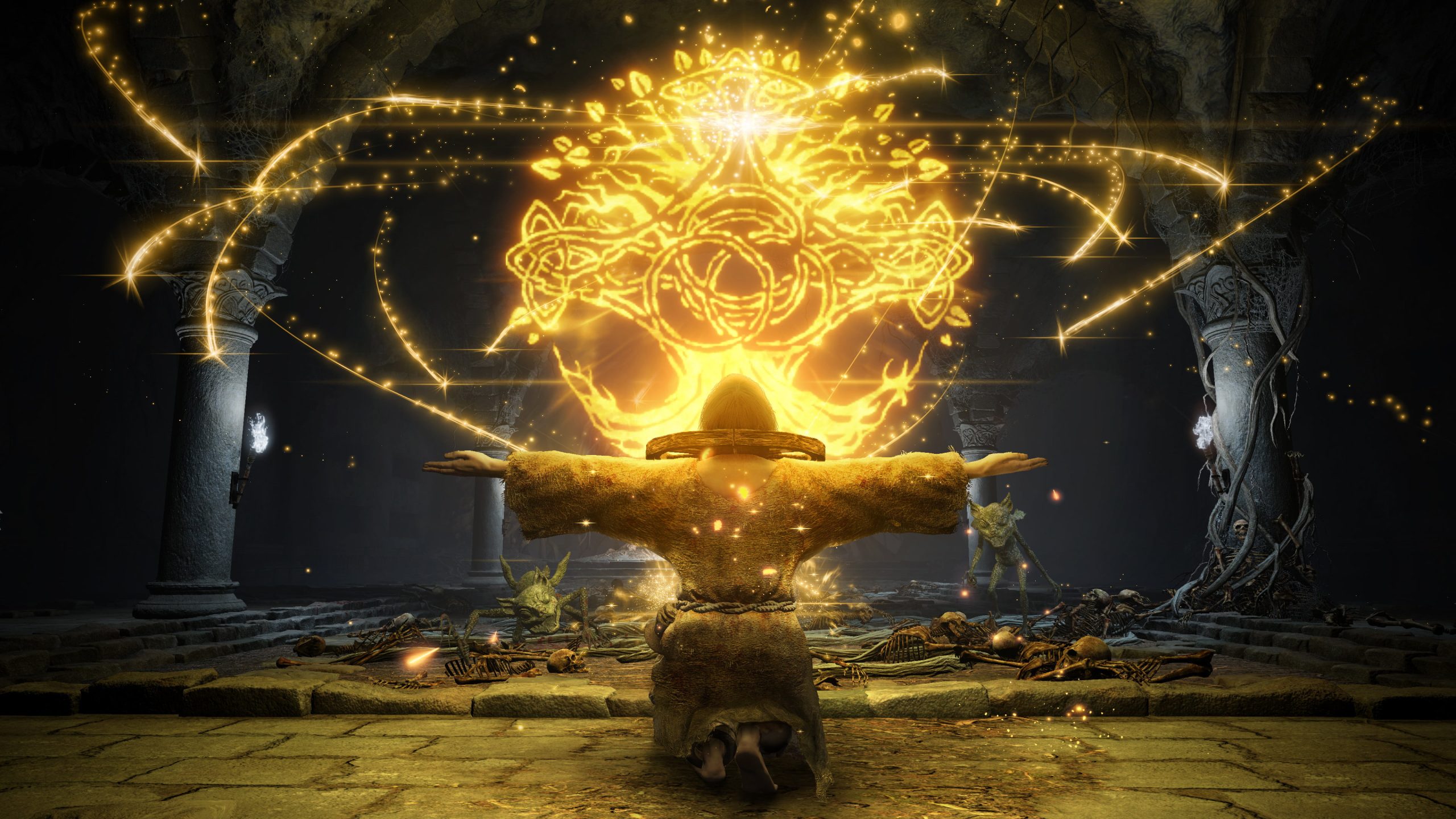
When a designer makes a game with a difficulty slider going in all directions, it implies that the point of the game isn’t specifically in the challenge of completing it, that it was meant to be experienced in a number of ways other than just one, like any other parameter the game has to offer. However, the lack of a difficulty slider doesn’t inherently mean the difficulty was integral to the art of the game either, just that it was designed as part of a whole. A painting usually consists of changing tones of color, but the painting can only be called a painting if you put paint on the canvas. A game can only exist as a game if it has a challenge. In both cases, it doesn’t imply that the change of tone or difficulty have anything to do with the artist’s intent, it’s just inherent in the creation of the object as we all understand it. With that in mind, not every perceived element of the design is intentional, nor is every perceived absence, however, there is often a sense we, the consumer player, possess at determining which is which. In the case of #GitGud culture, entry requires an understanding of the designed difficulty, a gatekeeping mechanism meant to define what is and isn’t a challenge worthy of participation in their ranks. It has become understood that Soulslike games are made with the intent of being something the average player would struggle with to master and they are created for the sake of overcoming that struggle. So we can continue with the assumption that the game’s difficulty was intended and thus integral to its artistic merit.

When discussing games, how do we define the difference between art, sports, and function? First, when I say function, I mean a mechanism that holds no artistic merit absent abstract observation, like a hammer and nail. The hammer’s function is to hit the nail so as to fasten something to something else. It performs a function. Video games are full of functions, all of which collaborate to create something more, either in the functions that hold the game together, like code calling classes or rendering art, or in the games design like physics or gravity. By themselves, the game’s physics are simply a function that tethers objects to our reality and maintains the laws of the game’s nature in a three-dimensional environment. The art of physics is in how they are applied, how they either differ or maintain distinction from our own real living space. Function is not art, but applying function can be artistic. The way Mario swings Bowser while grabbing his tail as we spin our joystick is entirely function, but the movement Mario makes and the visual of Bowser flying out of the arena is function colliding with art.

Let’s take for example the game Rocket League and the sport Basketball. Rocket League is a hybrid of cart racing and point based sporting within an arena, most popularly a mixture of RC cars and Soccer. The game is made up of hundreds of artistic assets, filled to the brim with different car designs and decorations to personalize your game avatar. The arenas are largely just big square cages in which your personal car is used to nudge a ball into the goal of the opposing team. Like Basketball, the rules that makeup the game, the game itself, is not art. It is a competitive event that pits individuals against each other to see who has the better players and strategy to succeed at getting the most goals by the end of the time frame. Basketball as a concept, its rules, is the reason that the players are gathered together. Rocket League is the reason players are logging in. The competition is entertainment. And in both cases, while they are not art, it was a mixture of art and function that created them. You could argue that the way you play the game is art. But not the game in and of itself. In Rocket League, when the ball explodes when entering the goal, that was an artistic decision, it was conceived by a designer and directly impacts our perception of the game. The same is true of Mario throwing Bowser. It was designed with intention. Someone had to conceive of these flares and implement it. And while these two games have that in common, the aspect that is missing that ties the game more directly to art is narrative.

Games as an art form is like saying painting is an art form. Humans have the tendency to assign narrative to situations that are devoid of them. It helps us connect with whatever has our attention at the moment. Even the most banal of art, say a picture of a lighthouse in a hotel room, is still largely considered art because it emotes, or in this case, it begs us to emote for it. We participate in it, even if only for a moment, we know it tells a story. Even a painting of three squares or maybe even just a line, when framed and given abstract observation is now art. Mario games, however scanty, have a defined narrative. Man trying to save Princess from Lizard. Even if it never spoke a line of dialog, it would be clear to us that we had a goal that had a layer beyond competition. And it’s the intent that we understand this that sets it apart from other games that appear to have narrative, like Pac-Man. Yellow discs eating ghosts isn’t a narrative. We do not know his purpose, its abstract nature begs us to pay attention to getting points, not saving the world. It has no beginning and no end. Some games defy narrative entirely, looking instead to focus on competition. Rocket League for example. It has no clear story, no clear abstraction for us to frame, its focus is to get us to play the game. It doesn’t want to distract us from its purpose as a sport. If you watch any modern sport, like Basketball, the story is on the court, and it’s about the game, but the narrative is strung together by the personalities of the players, separate from the actual game itself. Their disposition, skill, and injuries affect their play, but the game itself is unaffected, its rules are unchanging. Its rigid structure and consistency are pure function. It is not art, but we still have a desire to make art out of it.

Narrative is the strongest connective tissue between us and the object when viewed as art. We either create it for ourselves, or it is designed for us. In the case of games with narrative, this would be the final piece of the puzzle wherein I would consider the game art. We discussed how some games have no intention of being viewed as art, they are merely competitive in nature, either against yourself, the computer, or someone else. They are made up of artistic assets, the nature of designing a game is art, the way one plays a game can be art, but without direct narrative intent does a video game really ascend to wanting to be viewed as art, where it transcends its competitive function for something more. Pac-man is not trying to make a point. Gallega is not trying to make a point. They wanted you to play a game, solve their problems, and excel in their design. If the game played itself, we might have assigned narrative to Pac-man’s abstract nature, but only if it was framed in that light. Our input turns the object’s artistic abstraction into a function. It transitions from art to function. However, when we play as Solid Snake entering Shadow Moses, the transition between our play and the narrative is happening in tandem. It maintains its state as art while we play. As we complete challenges, its cameras switch and sweep, chosen for both its aesthetic location and to further alleviate or elevate challenge. It is designed with the intent of being art. Games are not inherently art but can be framed as such. Art does not denote quality. If I were to pull a random picture from my phone and show it to you, it would not be art. Unless I told you, this is my art and asked you to contextualize it as such. But even this may not be enough for you to accept that. So maybe I print it and put it on the wall. Suddenly, it must be accepted at the very least as art, though it may not be good art. Art has to have the intent of being art, but it also must adhere to the understanding of art abstraction.

This exercise was mainly to make one point, that Soulslike games can be art and that once something reaches that threshold, it deserves to be protected from compromises the creator does not want to make. As a game, the FromSoftware games have long adhered to all the artistic merits we discussed. It is not a sport and it is not simply a function, though you can find both of those elements in the game. After all, people will make competitive things that were never intended to be, like speedrunning, but that is outside of the creator’s hands at that point. Even games that are only sport or function were still created through strokes of art. Creating a game is an art form. If you change the rules of Basketball outside of the agreement of its participants or governing body, it is not really Basketball anymore. Streetball has a series of rules intended to make the game easier to play on the fly. It may adhere to Basketball’s main tenets, but you couldn’t stand on the world stage and declare yourself to be playing Basketball the same way as the players in the NBA. The games are similar, but the rules are different. It both is and isn’t Basketball. Unlike Basketball, it’s not as easy to create a video game, but if you were to remake all of Dark Souls with an easy mode, people would still tell you it isn’t Dark Souls. That game was made by FromSoftware designers, and what you have done, while similar, is still different. They own the right to their design and you to yours. And once you have made such a product, as art as it may be, the holders of such a game might even go as far to say it isn’t a Soulslike because it doesn’t adhere to one of its key principles, a difficulty curve that the average player will understand immediately as “hard” with no retreat.

This is how it affects our Path to Power. The cost of entry is relatively low, the value of success entirely dependent on yourself, but the distance between entry and success is meant to be long and arduous. The art of the game is not just its narrative or its assets, but its distinction from other games in that you are challenged beyond average. While you may want a way to experience the narrative and assets without the challenge, that wasn’t what the artist intended. This particular path to power is governed by the designer of the challenge. As a player, you enter into the agreement, as held by the abstract governing #GitGud body and the designer of the game, that if you complete this game as it was designed, you not only get the bragging rights, but the right to experience their art in its entirety. If an artist installed a work on the top of Mt. Everest, only those willing or able to get to the top could see it. Money, time, effort, means, those are all your domain, but the artist doesn’t need to change their venue to meet your needs. If the experience is worth the cost, you will find a way to obtain it. The path to power can be easy, and that’s great, but not all challenges are made equal. I think we should be thankful for that. Though possibly toxic at times, #GitGud culture is actually working as a protective force in the frame of artistic integrity. Variety is the spice of life and artists wouldn’t have it any other way.
Leave a Reply