
I had to be convinced that It Follows was a good film. I am not afraid to admit that I walked out of this film when it was first released completely disappointed. I should be afraid to admit that. The horror of the ridicule alone should have me shaking in my boots. But as I have initially implied, I have come around. It was a long, winding road, but I cleared the hump. Kind of. Even as I write this I remain skeptical, but largely I have come to realize my problems with the film and what I would have liked to see would have totally derailed its overt and underlying themes. When it comes down to it, my problem was simple; it was too smart a movie for the characters (and the world) to be some dumb.
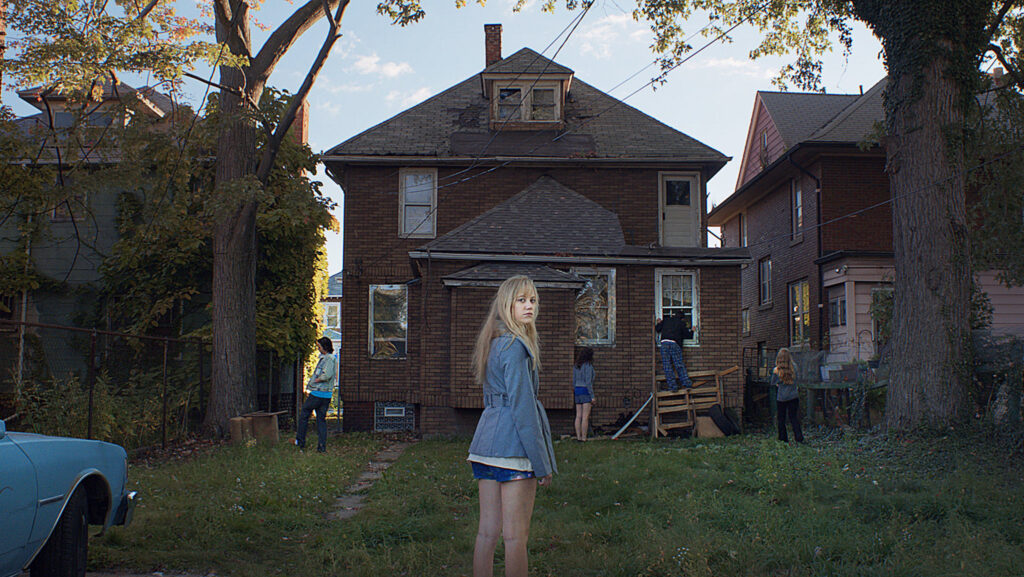
The discourse that turned me around on this is actually an argument juxtaposed to my own initial reaction. Fans of the film think it is both smart and a nice reprieve from slasher, jump scare shlock. For instance, the characters engage the otherworldly presence with a dash of realistic skepticism and actual experimentation. Unlike other films, the characters determine to some degree the parameters of the curse and that is baked into the narrative and even more impressively, the theme. But the one form of praise I hear most often is that they don’t use the internet or the library as exposition jumps. This reaction made the biggest impression on me, but it wasn’t what actually convinced me. In my mind, going in search of the person who passed on the curse worked to reinforce the theme, but it was also in line with the more grounded sense the film produces. I felt that while the argument for skipping past the library or internet research trope is valid in so much that it is a tired trope, I kind of got the sense that people kind of dislike this specific exposition format for a reason they aren’t really articulating. I think that people feel there is an impersonal nature to the library, and to an even greater degree, the internet. That these spaces aren’t played as characters. A library and its librarians, if they are lucky enough to be found, are stale or stodgy. An entire generation of Americans do not visit the library beyond their educational years, and what they might remember most fondly is not its wealth of knowledge, but its disciplinary setting. On the other hand, they have a very deep relationship with the internet, which at best could be considered chaotic neutral. The internet as a character in film tends to be antagonistic and adversarial. At best, you might consider learning from it like making a deal with the devil. But oftentimes in horror, it just provides easy answers, found as the first search result, just like the library might have a dusty tome handy, and those both often are asserted with no character. So what surprises viewers in It Follows is that we get to interact with a character to create depth. I guess my argument here is that they cleared a very low bar.
I am not sure how to put this, but it would seem to me that fans of It Follows like it because they are aware of the 4th wall they are watching this from. They are judging it mostly on its merits in the genre as a whole instead of in and of itself. They live in a world where most horror movies suck or are just not as well thought out. “It Follows” benefits from being coherent, well produced, and grounded in ways that other films in this genre traditionally are not. I consider this a bit less of a genuine or complete critique of any film, but it isn’t something one can escape entirely either. Once you have seen more than one film, it becomes part of a category in which all of its kind are judged. My initial reaction was coming from just as incomplete of a place, and thinking on it more deeply, possibly the worst kind of reaction, even if it is just personal. I judged the film for everything they didn’t do once they had established the curse. I judged It Follows for everything its characters didn’t do, the questions they didn’t ask, and the actions they didn’t take. Essentially, I felt like the film gave me the bait and switch. It creates realistic characters in a realistic place and even engages the lore of its own curse with a tact most would consider unnecessary in horror films. More than anything, maybe that’s the key here. So much of this film is unnecessary in the traditional horror space that prevails in the minds of American cinema customers. It’s a real film about the horrors of sexually transmitted diseases and relationships and how it affects the lives of young people who are cursed to carry it for the rest of their lives wrapped into an irreligious curse. And like a silver medal Olympian that did everything right in the air, they missed the gold by not sticking the landing. At least, that’s how I felt at first. I can see now I was simply being a bad judge.
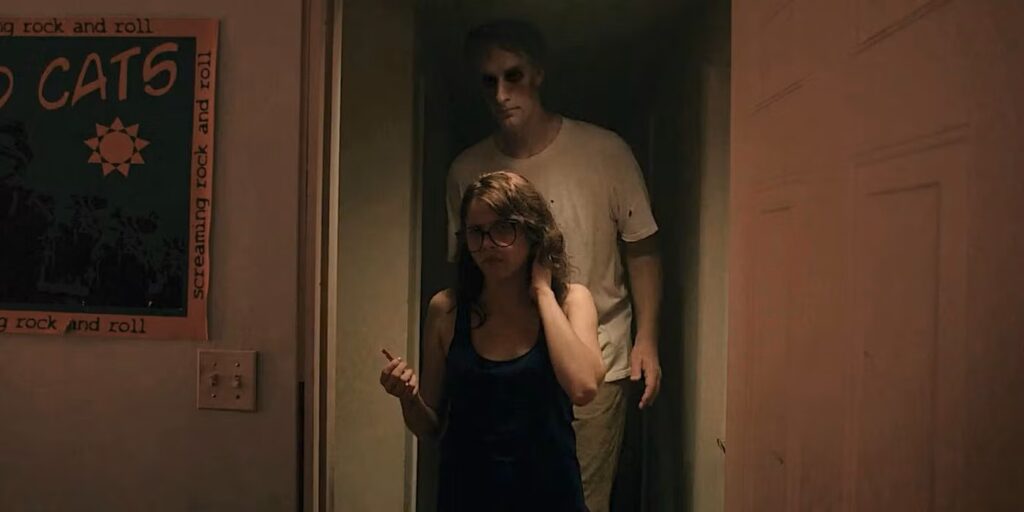
As a viewer, I was ignoring the point of the film, I was engaging the curse without engaging the reason for the curse. I wanted them to defeat the curse or in some way learn to control it. Maybe that could have been rolled into the film, but I think the impact would have been shifted in a completely different direction. Once the characters learn how the curse works and that it is indeed dangerous, the film then finally has them fall into the classic horror tropes of underestimating it, even to the point of having them follow a very obvious hero’s journey by having them reject the call only to return and confront it once more. Now I feel like I am falling over myself, so let me just posit two simple scenarios, one that would be within the theme and one that would take this film in a completely different direction. First, why not talk to a trusted adult? This curse has been around since the dawn of man, at least in theory. Since it follows only the most recent person, it’s very likely that even a family member could have gotten the curse, and simply beat it by putting enough people between them and it, to the point that it’s been so long that they have almost forgotten about it, or taken it less seriously than these young people. Adults have processed their mistakes and maybe they grew from it, or maybe they were so terrified that they were obsessed with making sure for years that curse was successfully passed to people far beyond them, stalking the victims of the curse just as the curse does. The other scenario is just an unhinged, frivolous excuse to stretch the cannon a bit, but why not tell the government and prove the existence of this curse. Expand the study of physics and metaphysics. Convince the world of the existence of invisible, unstoppable forces only one person at a time can see.

This kind of rhetoric is the kind one can’t really take seriously as a critique of the film because it fundamentally ignores what the film is trying to accomplish. It is in the same vein of being mad about the direction Star Wars has taken over the years, but different in that while fans of Star Wars are engaged in discussions about the worlds of the films, they aren’t concerned with what the film has to say at all. Or maybe it’s because what Star Wars has to say is too simple or too broad. In either case, It Follows held up a reflection of my own expectations and desires I had for its plot and then proved that I judged it not based on what it did well, but rather what it didn’t do that I wanted it to do. Just because it turned left instead of right. It never once betrayed itself nor the horror genre. It stuck to its guns and it shot a bullseye. I learned to respect it and in turn learned something about the way I watch films and how to better engage them. Its ok to be disappointed in the film you didn’t see, but you are going to leave doubly unsatisfied if you don’t at least try to enjoy it for what it is. But it is a rare film that can excite you to the point that you leave disappointed because of what it does not do. If it can take you that far, it may be a good idea to check yourself and pay attention.
Leave a Reply