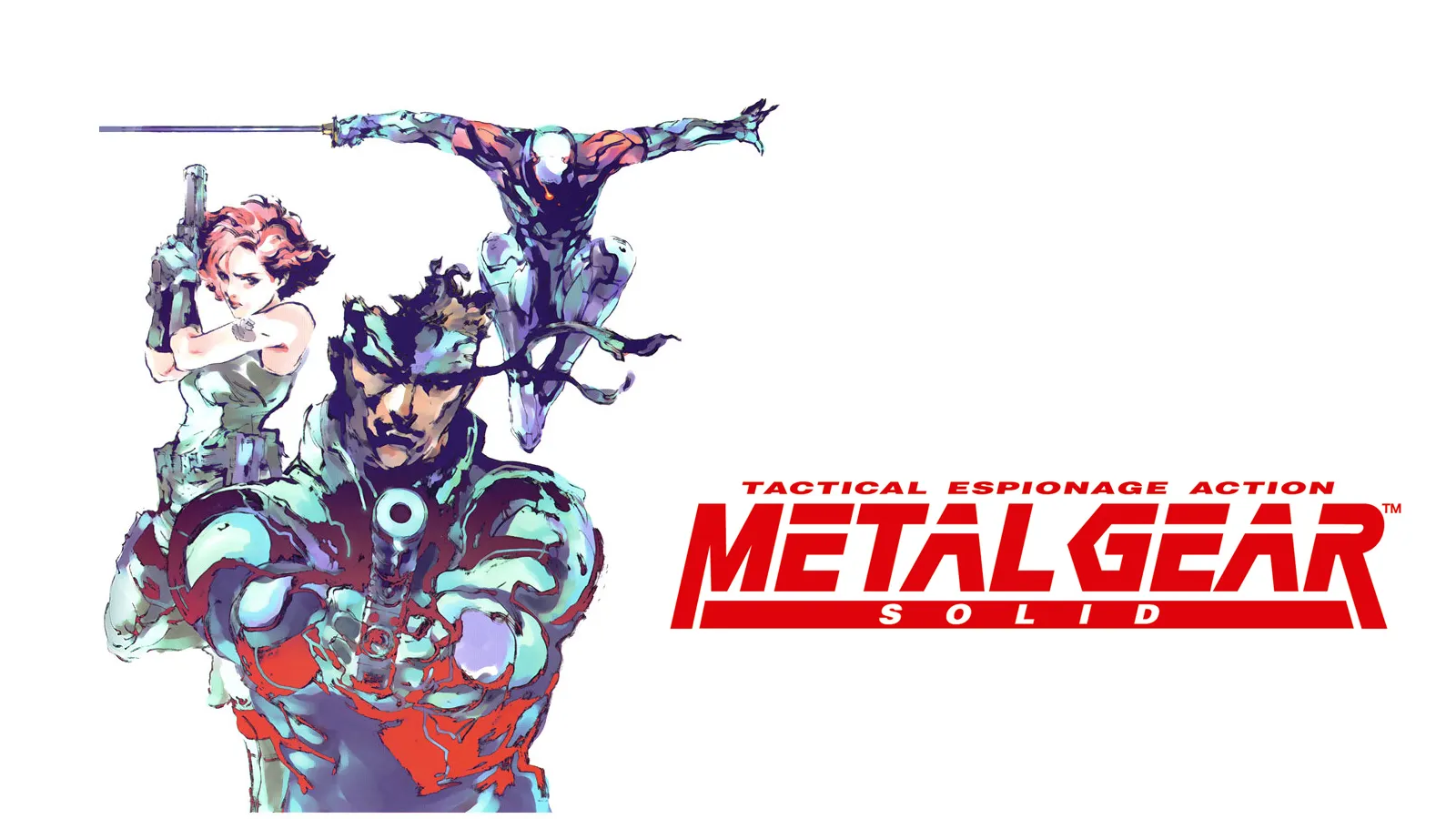
I can still remember the very first time I played Metal Gear Solid. It was the most engrossing cinematic gaming experience one could have on a monaural 13-inch tv in your friends living room in the middle of the night. It was a bigger story than I was ready to understand, but that didn’t stop it from leaving an undeniable impression on anyone who was prepared to single-handedly stop thermo-nuclear war. Before you even press start, you are given the backdrop of your mission and introduced to your support team and prepped for infiltration via manned torpedo. The structure of this introduction is clearly modeled after the big action movies of the 80’s and 90’s. Gliding images set to a soft melody that increases in tension until you hear the sound of power ballad drums pound into the scene and the action can finally begin. Needless to say, Metal Gear Solid is more cinematic than any game of its era, actively pursuing the language of film to create its biggest moments. It really felt there had never been anything like Metal Gear Solid before it, and for a long time, I thought that was the case. I think it was widely reported that this was the third game in the series, but that was all really drowned out by the fact that those previous games were “old” and largely un-played in America because of a lack of popularity of the original system the games were developed for. The era of polygons, camera angles, and full voice acted games was here, and Solid was the most ambitious and genius use of the medium to date. Thus Metal Gear and Metal Gear 2: Solid Snake largely forgotten, but in the tradition of the grand conspiracies the series is known for, I decided to unearth the past to uncover the truth; What happened to the foundations of the series? I couldn’t have been more shocked by what I found.
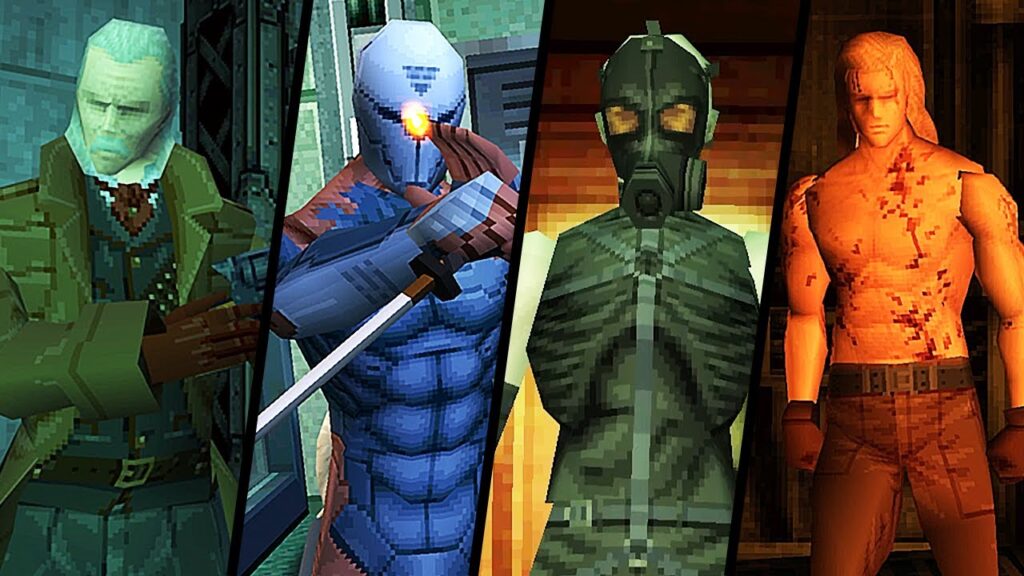
I didn’t set out to destroy my memory of Metal Gear Solid. It started perfectly innocently. I was looking for a game to play and I realized that out of all the games I own, Metal Gear Solid 2: Sons of Liberty was one of the few I had started numerous times, but always walked away from at around the halfway point. In the past, I would have blamed the introduction of Raiden to some degree, but really I couldn’t stand how colorless and stale the game felt while playing through the Big Shell portion of the game. Sure, at the time it was a big deal that they dropped a demo featuring Solid Snake as the main character, all of the advertising was for Snake, even the box art is of Snake, only to switch the game to a new protagonist. And sure, Raiden was received poorly by large swaths of the western audiences. I am not going to say it didn’t have any effect, but when I searched my feelings, I was simply bored at a certain point. Metal Gear Solid felt different, even if the game was played almost entirely on a snowy base and had the same visual feeling throughout, the pace of the game was just more methodical than Sons of Liberty. It felt like there was a singular goal that kept getting bigger and bigger. And that may have been the intent with Sons of Liberty, but the starts and stops were just too varied in length and purpose. In any case, I set out to beat Metal Gear Solid 2 and was pleasantly surprised that had I stuck with it all those years ago, I would have made it to that point where the game kind of takes off. Essentially, I stopped right at the top of the roller coaster.
I was looking to play Metal Gear Solid 2, but I wanted to play a version with the most amount of content possible, if only to fully imbibe all it had to offer. I had the Playstation 3 Metal Gear Solid collection, but streaming from the PS3 lacks the HD fidelity due to the HDCP installed on the system, and if no one can watch you play in HD, what would be the point of any of this? That led to shelling out for the Metal Gear Solid: Master Collection Vol. 1 on Playstation 5, which was much more definitive than I expected. It appeared to have all the versions of the first three Solid games and tons of extra side content including the “screen plays” and curiously Metal Gear and Metal Gear 2: Solid Snake for the MSX. Maybe it was just the nostalgia, maybe it was seeing all the content, or maybe it was actually completing Sons of Liberty for the first time, but I suddenly found myself unable to ignore exploring more of what this collection had to offer.
At this point, it had been maybe 10 or 15 years since I had played the original Metal Gear Solid. About 10 years before that, on September 11th 2001, the twin towers were struck by a terrorist attack. Follow me here. Metal Gear Solid 2 had an ending that was oddly similar to the terror attack, in so much as that it ends in New York, but the whole underlying issue of them being similar at all was pretty alarming at the time. At the time, I was still pretty young and I didn’t understand the magnitude of the Twin Towers attack and the effect it would have on America and the world. Playing Sons of Liberty almost 25 years later, now very much an adult, was a very different experience than when I was a kid. I was still bored by the visual nature of the game, but I could actually understand the bigger machinations of the story and why it was a big deal at the time. Armed with an entire collection, I decided to head back to Metal Gear Solid to see what new illuminations my adult mind could unearth. I wasn’t disappointed, but I will say that the more straightforward nature of Solid versus the verbose and dense Sons of Liberty is preferable. In the end, there was very little from Solid that I didn’t understand the first time around as a kid, and I think that really says something. There is something purely entertaining and understandable about Solid. With the depth of the collection at my fingertips, I decided to play each version of the original available. Though missing from the collection, I took on the Twin Snakes next, which turned Solid into a weird hybrid of the then released Sons of Liberty, using its control scheme and its extreme take on action spy movies. In the early 2000’s, action movies would take a dive into the absolutely absurd due to jumps in technology. Twin Snakes is to Solid as Mission Impossible 2 is to Mission Impossible 1. Same genre, different takes. I finished off my run with the semi-directors cut release Metal Gear Solid Integral, a japanese only release where the entire game had its American voice cast with Japanese subtitles. This was done largely because Kojima seemed to have always meant for the game to have a completely western feel and felt that Japanese gamers should try to appreciate it as he intended it to be. While largely the same, it was interesting to see how far the Japanese subtitles were from what the American cast was actually saying. It also included a special codec that would reveal notes from the development team. Integral wasn’t quite as necessary as its namesake implied, but it was a good endcap to the Solid experience.
Not to make this longer than it needs to be, but this also made me feel a little guilty. There are probably a handful of games I play every year, while others don’t make the cut. And it kind of blows my mind now that Metal Gear Solid was not one of them. For instance, I play Silent Hill for the Playstation 1 around Halloween every year. It invites the true spirit of the season, and it reminds me of the first time a video game really scared me. Maybe if I was more patriotic, it might have inspired a yearly session of Solid on Memorial day. It even has all the hallmarks of a replayable game; it’s short, memorable, and fun. Maybe it was the being let down by Sons of Liberty, because in a lot of ways, that was a bigger memory for me. I was a bit older and the Playstation 2 was the industry defining machine of its era. So coming back to Solid and falling for it all over again just to learn even more that tarnishes its reputation and my memory is frustrating.
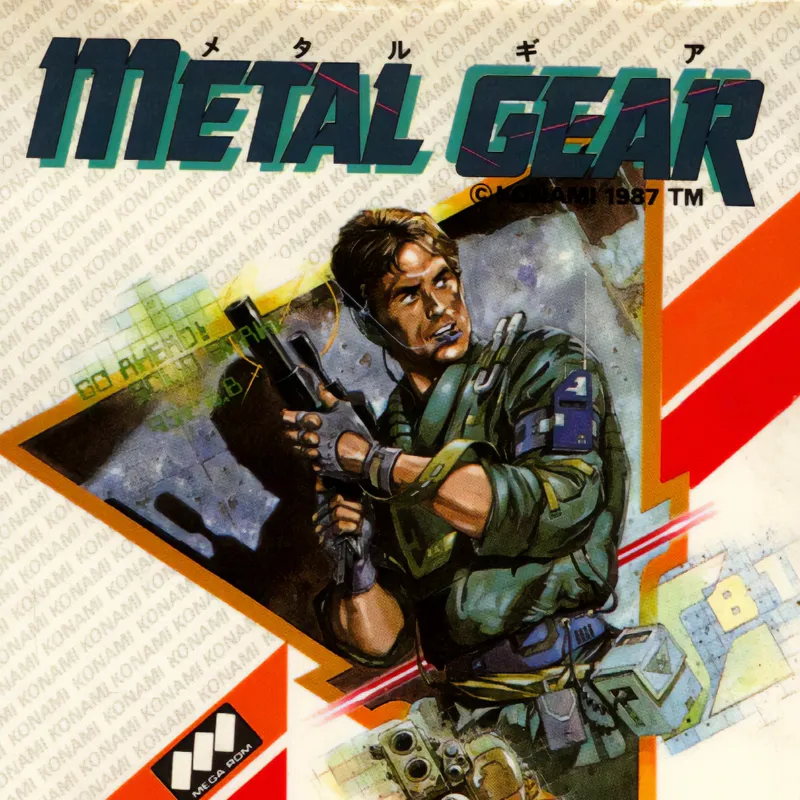
After 3 complete playthroughs of the Solid, reading a fair amount of the various trivia available in the collection, and watching some deep dives by youtubers, it was very clear to me that Solid was a masterpiece, one I would love to talk about some day, but we are still on my journey of discovery. It was at this point that I realized through all of this, I had never heard anything about the original Metal Gear. None of the trivia or youtube reviews could prepare me for how mindblowing this experience was going to be. Almost on whim or maybe still hungry for more of what Solid had to offer, I decided to finally try the original Metal Gear. From the very first moments of the game, it’s like you are seeing the DNA of the entire Solid series rendered in 8-bit graphics. It starts almost the exact same way as Solid, in so much as that Snake sneaks into Outer Haven the same way he sneaks into Shadow Moses. He has no weapons and must procure them on site. The codec messages are exchanged with the same screen effect, giving faces to our otherwise incomprehensible action figures on the screen. The objective is to sneak and remain unseen rather than directly interfere with enemies. Moving from screen to screen happens via boundary limits or card key locked doors. Mines can be disarmed by crawling over them. Health is replenished by Rations. Smoking reveals alarm lasers. Bosses are bigger than life characters with backstories and special skills. The backdrop is littered with storyline information, including saving POW’s who lay out hints. The temperature controlled keys that control the final moments of the game. You even have to do the backtracking through the stage that a forward momentum game like Solid is infamous for. Later in Metal Gear Solid 2, they even added the radar with friendly and enemy icons visible. Basically, if you strip away anything you felt was unique about Solid, you wouldn’t have a game at all. Put a different way, if you ever played Metal Gear, nothing in Solid would be a surprise. Solid is just a re-invisioned version of the original Metal Gear, or to bring it into the modern day, Metal Gear Solid is a Remake. And this blew my mind. I was so impressed after I got over feeling deceived.
Knowing that Metal Gear, at its core, is about creating secrets and then revealing them in fantastic ways made this all the more dramatic for me. Like I was uncovering a secret that everyone else had decided to keep and that in my talking about it now, I am betraying that very group. In reality, it’s just an issue of access to the original games, but even that feels like part of the master plan. It feels like all the genius that Solid gets credit for is owed to the two previous games. The only difference in identity is the level of fidelity allowed by the generational difference between each version of the game. Solid is the crescendo of the design, the peak of its presentation. But a peak is often only as good as its climb. And it would be wrong to say that these games are in some way lacking anything that Solid has to offer. But it would also be a lie to say that I see myself going back to Metal Gear 1 or Metal Gear 2: Solid Snake. They are both great games, but they also come with the frustrations and limitations of their era. Its hard to know where to go if you don’t take notes. Traversing the bases is in some ways a navigational nightmare. Because most rooms look the same, it’s hard to remember where you have been or where you need to be. The codec calls are very rudimentary. And there are more traps that create instant death scenarios if you aren’t careful. Metal Gear Solid is the best version of the Metal Gear series. It’s the truest vision of the 80’s cinema mentality that bled into the 90’s era action thrillers.
Playing the previous Metal Gear games before playing Solid is like watching them build the set at a magic show. It’s hard to imagine that the praises for this game would have been as strong had the previous two entries been as popular. Specifically I am talking about its claims to originality. If one thing stuck with me, it was how the game played differently than any game around, but it was weird to find out that it always had. That Solid was not new, it was just new to us. Its hard to find well laid accounts of the feelings of the people who had played the previous entries before Solid. Most reviews seem aware that there is obviously a story in the previous games, ones that make up the backbone of Solid, but they also constantly tell you it isn’t important to enjoy the game, which is also true. Its just another reason Solid is great, but the same again is also true of Metal Gear 1 and 2. They both have histories on either side of their creation, but they largely don’t matter in the moment. For instance, it doesn’t matter that Grey Fox was an operative of some importance before Solid, because Solid lays out so well why it matters that this is the case. It doesn’t matter that Snake is a legend, because we are about to experience why he is a legend in the moment. We don’t even need to know what he did to become legendary because we are about to make him one for the third time. The Metal Gear series harnesses all the power of sequential releases and none of the baggage. It is a storytelling marvel we don’t see often in our modern times.
To summarize my experience, Metal Gear Solid is clearly the culmination of genius ideas that defined a genre and the era, but its history should be consulted when discussing its merits. It is a misconception that all its parts came out of nowhere, or that it somehow doesn’t matter because only the summit of Mount Everest matters, and the rest of the mountain is meaningless dirt. Metal Gear Solid is not an entirely original work but it appears to have been represented that way, because that is the way most people would be playing it. If the world were more aware of its history, you can be sure their love of Solid would have brought the originals to the Playstation 1 years ago. Instead we got 2 different versions of Metal Gear Solid and two subsequent offshoots. My argument is simply that Solid does not own the genius of the series outside of its own cinematic presentation. And maybe what’s worse is that it never grows beyond Solid’s shine. Personally, for me, Metal Gear Solid 3: Snake Eater is a series highpoint and culmination, but it isn’t owed any genius alone. This is true of Sons of Liberty and Guns of the Patriots as well. Playing Snake Eater after the high of Solid and the lows of Sons of Liberty grants an appreciation that may not have been as deep otherwise. If you want to experience all the genius that Solid provides, climb the whole mountain instead of taking a helicopter to the top. The climb to the top makes the peak that much more satisfying.
Leave a Reply